

Panchakarma in Winter: A Guide to Rest, Renewal and Ayurvedic Cleansing in Sri Lanka
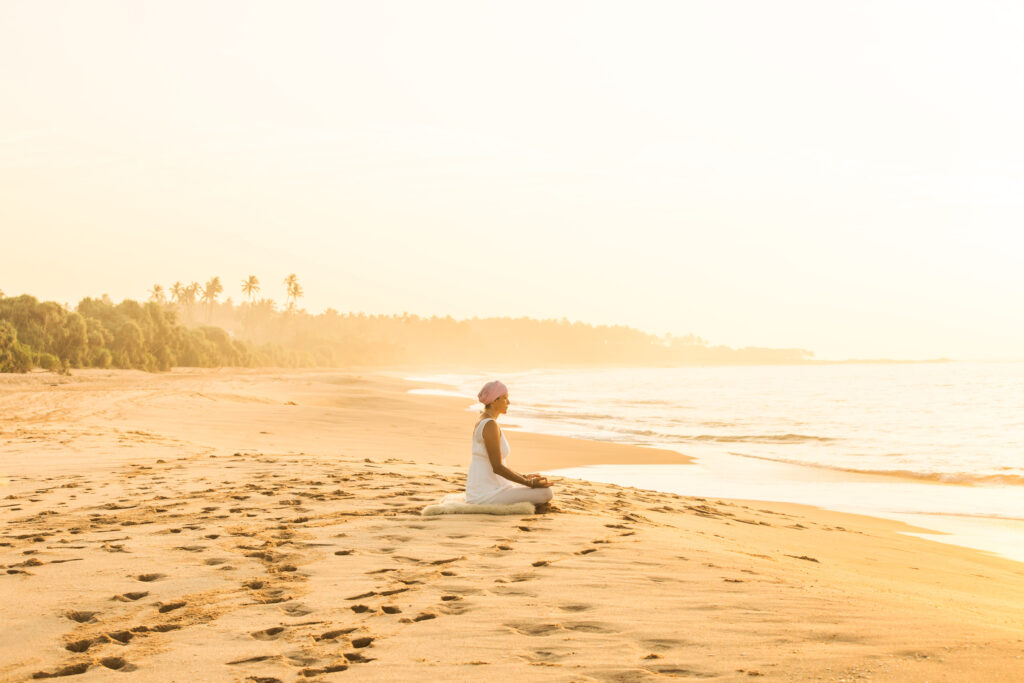
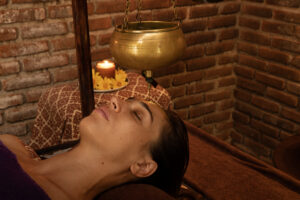
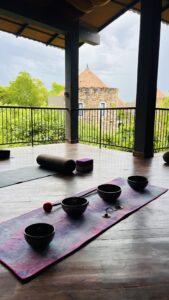
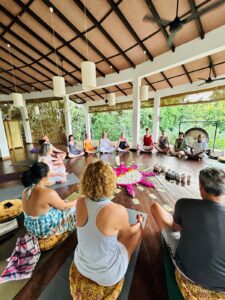
As 2026 draws to a close, winter offers something increasingly rare: permission to slow down. For those seeking a meaningful way to end the year, a Panchakarma retreat in Sri Lanka offers the time, space and expert Ayurvedic care to rest, recalibrate and regenerate before crossing the threshold into 2027. Why Winter Is the Ideal Season to Turn Inward There comes a moment each year when the light changes. The days draw inward, the natural world grows quieter, and beneath the momentum of daily life we may begin to feel a different kind of invitation: not to do more or become more, but to pause long enough to hear what the body and mind have been trying to tell us. Winter has always carried this quality. It is a season of return, a movement away from the outward and towards the essential. For many of us, it arrives after months of accumulation: work, travel, responsibilities, decisions and the constant, almost invisible demands of modern life. Our instinct is often to resist the season by seeking more stimulation and more productivity. Yet nature offers another teaching. It withdraws, conserves and becomes still. A winter Ayurveda retreat creates a deliberate pause in the habitual rhythm of life. Within that pause, Ayurveda provides structure and care, while the season itself reminds us that regeneration does not always begin with action. Sometimes it begins with stopping. What Is Panchakarma? More Than an Ayurvedic Cleanse Panchakarma is often described simply as an Ayurvedic cleanse, but this description misses much of its depth. Traditionally, Panchakarma belongs to a sophisticated system of Ayurvedic care in which cleansing is not an isolated event. It is an individually considered process that includes preparation, therapeutic treatments, nourishing food, rest and integration. It is not a race to empty the body, nor a fashionable detox to be endured before returning to the same pace of life. At its heart, Panchakarma creates the conditions to step away from excess, simplify daily rhythms and take time to listen. This is why the setting matters, why time matters, and why the relationship with your Ayurvedic practitioner matters. Above all, the individual matters. The Importance of Authentic, Personalised Panchakarma No two guests arrive at a retreat with the same story. Each person brings a different constitution, different rhythms, different life experiences and different needs. Authentic Panchakarma honours this individuality. Rather than offering everyone the same sequence of treatments, traditional Ayurvedic care begins by looking closely at the person who has arrived. At SEN Wellness Sanctuary, personalisation sits at the heart of every Panchakarma journey. Each programme is held with deep respect for the Ayurvedic tradition while recognising the whole person, not simply a timetable or a list of symptoms. Treatments and daily rhythms are shaped around individual needs and guided by our Ayurvedic team throughout your stay. Panchakarma is not something to be imposed upon the body. It is something to be listened into. How to Choose an Authentic Panchakarma Retreat As Panchakarma has grown in popularity worldwide, the word now describes many very different experiences. If you are considering an Ayurvedic retreat, it is worth looking beyond the label and asking how the practice is actually delivered: Individual consultation: Is there a meaningful one-to-one consultation before treatment begins? Personalised programme: Is your programme tailored to you, or predetermined? Experienced practitioners: Are treatments guided and adapted by qualified Ayurvedic practitioners? Time to integrate: Is there enough time for preparation, rest and integration? Therapeutic nutrition: Is food treated as part of the healing journey rather than an afterthought? A restful environment: Does the setting genuinely allow you to slow down? That final question is asked less often, yet it may matter most. The deepest work of retreat rarely happens through treatment alone. It happens in the spaces between: an unhurried afternoon, the silence after meditation, a walk through nature with nowhere to be, and the quiet realisation that nothing is asking you to hurry. Beyond Panchakarma: Meditation, Breathwork and Yoga At SEN, the retreat experience extends beyond the treatment room. While the body receives Ayurvedic therapies, a quieter process can unfold alongside them. Meditation helps us notice. Breathwork reconnects us with something elemental and immediate. Yoga and contemplative practice help us inhabit the body with greater attention. Time in silence and nature allows the constant movement of the outside world to soften. These practices are not simply activities added around an Ayurvedic programme. Together, they form a deeper container for the retreat. Panchakarma invites us to simplify physically, while meditation invites us to observe what remains when the noise settles. Gradually, retreat becomes less about escaping life and more about returning to it differently. A New Way to Begin 2027 The arrival of a new year often brings pressure to reinvent ourselves, with new resolutions, new ambitions and another list of who we believe we should become. The threshold into 2027 can be approached differently. Before deciding what to add, we might ask what we are ready to put down. Before deciding where to go, we might notice where we already are. This is the quieter possibility winter holds: not transformation through force, but transformation through attention. Panchakarma at SEN Wellness Sanctuary, Sri Lanka Set between the lagoon and the ocean in southern Sri Lanka, SEN Wellness Sanctuary offers an environment intentionally created for this kind of inward journey. Here, Panchakarma is practised with respect for its Ayurvedic foundations and close attention to each guest’s individual needs. Ayurvedic care is complemented by meditation, breathwork, yoga, contemplative practice, nourishing food, and the natural beauty of the island. There is time to receive, time to reflect, and time to rest without needing to justify it. What makes a retreat truly transformative is not the number of things you experience, but the depth with which you experience them. This winter, give yourself the rare gift of arriving slowly. Rest. Recalibrate. Regenerate. And from that quieter place, begin again. Explore our Panchakarma retreats | Book a consultation with our Ayurvedic

When Winter Calls Us Inward
Choosing a Transformative Retreat in Sri Lanka There comes a point each year when the world begins to soften its pace. The days grow shorter. The light changes. Trees let go of their leaves. Across much of the Northern Hemisphere, winter invites life to slow down. Perhaps there is wisdom in that. Most of us spend much of our lives moving from one responsibility to the next working, caring for others, solving problems, planning ahead and responding to demands that never seem to end. Even rest can become another item on the list. Often, we do not realise how tired we have become until we finally stop. Winter has a way of revealing what has been hidden beneath the noise of everyday life. We begin to notice the quality of our sleep, the tension we carry in our bodies, the conversations we have been avoiding, or a quiet feeling that something within us is asking for attention. This is why choosing a retreat should be about more than finding somewhere beautiful to escape to. Sometimes, a retreat begins with a deeper question: What in my life is asking to be heard? Leaving the Familiar There is something profoundly restorative about stepping away from the environment that shapes our everyday lives. At home, we are surrounded by expectations, routines, obligations and reminders of who we need to be. Even when we take time off, part of us can remain connected to everything we have left behind. Travelling somewhere different creates space. The journey itself can become a threshold between one chapter and the next. New landscapes, unfamiliar rhythms and different ways of living gently interrupt our habits. With time, the body and mind can begin to recognise that they do not need to remain in a constant state of alertness. This is not about escaping life. It is about creating enough distance to see life more clearly. And sometimes, we need to travel far away in order to come closer to ourselves. From Winter Into Light For guests arriving from Europe and other parts of the Northern Hemisphere, travelling to southern Sri Lanka during winter can feel like moving between two worlds. Cold mornings and grey skies give way to warmth, sunlight and open air. Shoes are left at the door. Meals are enjoyed in the open air. The body feels the warmth of the sun. The rhythm of the day becomes less hurried. At Sen Wellness Sanctuary, nestled among the natural beauty of Rekawa on Sri Lanka’s southern coast, nature is not simply a backdrop to the retreat experience. It is part of the experience itself. Morning begins with birdsong. The lagoon changes with the light. The ocean moves according to its own rhythm. The surrounding wilderness quietly reminds us that we are part of something much larger than ourselves. We have always believed that nature is one of our greatest teachers. Not because it fixes us, but because it helps us remember. When to move. When to eat. When to rest. When to gather. And when simply to be still. What Makes a Retreat Transformative? The word transformation is often used in the wellness world. For us, however, transformation is something much gentler. It rarely arrives through a single treatment, ceremony or dramatic breakthrough. More often, it unfolds quietly. It begins when the right conditions are created for the whole person body, mind and spirit to settle. This is why our approach is not centred around one healing tradition alone. Ayurveda provides an important foundation, complemented by yoga, meditation, breathwork, therapeutic bodywork, nourishing food, movement, nature and deep rest. These are not simply activities placed into a schedule. They are different ways of reconnecting. Reconnecting with the body. Reconnecting with the breath. Reconnecting with what has become depleted. And, perhaps most importantly, reconnecting with the parts of ourselves that can become difficult to hear in everyday life. The Body Often Speaks First Over many years of welcoming guests from around the world, we have noticed something again and again: The body often knows before the mind does. Some guests arrive feeling exhausted. Others are struggling with disrupted sleep, digestive discomfort, persistent tension or a sense of overwhelm. Others arrive without a clearly defined concern at all. Life may appear successful on the surface, yet something deeper feels disconnected. The body can begin telling this story long before we find the words for it. It can appear in our breathing, our posture, our energy, our sleep or our inability to truly rest. This is why a personalised wellness journey begins with listening. Not simply asking: What treatment is needed? But asking: What is happening in this person’s life, body and inner world, and what conditions might support greater balance? The answer is different for everyone. For one person, healing may require movement. For another, stillness. One guest may benefit from structured therapeutic support. Another may simply need permission to rest. Sometimes healing is not about doing more. Sometimes it is about finally allowing ourselves to do less. Ayurveda, Panchakarma and the Wisdom of the Body For thousands of years, Ayurveda has approached wellbeing as a relationship between the individual and the rhythms of life. Rather than treating the body as something separate from the mind or environment, Ayurveda considers the person as a whole. At Sen Wellness Sanctuary, this philosophy informs the way each guest’s journey is approached. Treatments are not selected simply because they appear on a programme. They are considered in relation to the individual, their constitution, current state of balance and the intentions of their retreat. For guests undertaking a deeper Ayurvedic journey, Panchakarma may form part of a personalised programme under appropriate professional guidance. The intention is not to pursue wellness as another achievement. It is to create the conditions for slowing down, restoring balance and developing a deeper awareness of the body. The Gift of Time One of the most overlooked aspects of any meaningful retreat is time. When guests first arrive, they often carry

Can Ancient Wisdom and Modern Science Learn From One Another?
Essay Three- The Future of Human Wellbeing: An Ongoing Inquiry Where the Question Began For many years, I carried two worlds within me. One was shaped by anatomy, physiology, neuroscience, and the discipline of scientific inquiry. The other was shaped by meditation, contemplation, Ayurveda, and a lifelong curiosity about how different cultures have understood healing. For a long time, these worlds appeared separate one belonging to laboratories, hospitals, and universities; the other to monasteries, forests, Indigenous communities, and traditions refined over centuries through lived experience. Yet the deeper my inquiry became, the more I found myself asking a different question: must these worlds remain separate, or might they have something important to learn from one another? Where the Question Began: Three Decades of Clinical Practice This question didn’t arise from philosophy alone — it emerged from clinical practice. For three decades, I had been asking how healing happens. Not simply how symptoms improve, but how human beings recover a sense of wholeness after suffering. The more I explored contemporary science, the more I realized that many researchers were beginning to investigate questions that contemplative traditions had also explored for centuries: How does attention change the mind? How does compassion influence wellbeing? What is the relationship between bodily awareness and emotional regulation? How does our sense of self change through sustained contemplative practice? These are no longer only philosophical questions they are increasingly scientific ones. Research in contemplative neuroscience has begun examining how meditation relates to interoception, attention, and different aspects of the experiential self, while acknowledging that many mechanisms remain under investigation. This didn’t surprise me. It encouraged me because I had never viewed science and contemplative traditions as competitors. I saw them as different ways of observing the same human mystery. Two Ways of Asking the Same Question Science asks questions through measurement. Contemplative traditions ask questions through disciplined awareness. One seeks external verification; the other explores first-person experience with extraordinary commitment. Each has strengths. Each has limitations. Neither is complete on its own. As my own inquiry deepened, I found myself traveling not in search of another therapy, but in search of different ways of asking the same question. I spent time with Indigenous communities in South America, listening to perspectives on relationship, community, and the natural world cultivated over generations. I deepened my engagement with Buddhist contemplative practice, a path that had quietly accompanied me since childhood. Meditation, silence, chanting, and sustained reflection were never, for me, techniques to master they became ways of investigating the nature of attention, suffering, compassion, and awareness. I also continued my conversations with researchers exploring trauma, contemplative science, consciousness, and altered states. These exchanges didn’t diminish my appreciation for traditional wisdom they strengthened my conviction that careful scientific inquiry and careful contemplative inquiry need not be in opposition. The earliest relationships between infant and caregiver appear to influence emotional regulation, stress responses, attachment, and aspects of later development. Rather than viewing development as purely genetic or purely environmental, researchers increasingly recognise a dynamic interaction between biology and experience. This naturally led me towards attachment theory, developmental psychology, and the emerging science of epigenetics. These fields do not suggest that our future is predetermined. Rather, they remind us that human beings develop within relationships. Experience matters. Connection matters. Safety matters. What Contemplative Neuroscience Is Discovering About Meditation One area where this dialogue is becoming particularly interesting is the study of meditation itself. For centuries, contemplative traditions have described meditation as a way of cultivating attention, emotional balance, compassion, and insight. Today, neuroscientists are investigating many of these same practices using brain imaging, physiology, and cognitive science. Reviews suggest that different forms of meditation engage different neural networks rather than producing a single, uniform brain state underscoring both the promise and the complexity of this research. Likewise, researchers are increasingly interested in interoception the perception of signals arising from within the body and its relationship to emotion, self-awareness, and wellbeing. These questions resonate with long-standing contemplative observations about embodied awareness, even though the scientific and contemplative frameworks remain distinct. Even the study of compassion and prosocial behavior has begun to broaden. A recent systematic review suggests that meditation programs incorporating Buddhist wisdom practices may enhance prosocial behavior and a sense of common humanity, while also noting the need for further high-quality research. The Real Lesson: No Single Lens Is Enough For me, however, the most important lesson has never been that science validates ancient wisdom, nor that ancient wisdom should replace science. It is something much simpler: human beings are too complex to be understood through a single lens. Our biology matters. Our psychology matters. Our relationships matter. Our communities matter. Our environments matter. Our attention matters. Our stories matter. Perhaps the future of wellbeing will emerge not by asking which discipline is correct, but by asking how different disciplines can deepen one another’s understanding. That is the inquiry that continues to guide my own work. A Living Conversation, Not a Single Philosophy It is also the spirit in which Sen Wellness was created not as a place devoted to one philosophy, but as a living conversation between clinical science, contemplative practice, nature, community, and the enduring human search to understand what it truly means to heal. The purpose of this conversation is not to dissolve the boundaries between science and wisdom. It is to build respectful bridges across them. The future of human wellbeing may depend not on choosing one over the other, but on cultivating the humility to recognize that both still have much to discover. The more we learn about human beings, the less convincing it becomes to divide health into isolated categories: Mind. Body. Emotion. Relationship. Meaning. Environment. Each influences the others. Each forms part of a living system.
The Future of Human Wellbeing: An Ongoing Inquiry
Essay Two – When Science Began Asking the Same Questions Science does not replace curiosity. It gives curiosity a language. For many years, I believed the questions I carried belonged only to my own clinical journey. They had emerged quietly in neonatal units, consulting rooms, and countless conversations with patients shaped by moments that rarely appear in textbooks: the silence beside an incubator, the way a person’s breathing changed during a difficult conversation, the gradual softening of a nervous system that finally seemed to experience safety. I assumed these were simply observations gathered through practice. Over time, I realised they were also becoming questions for science. A Widening Scientific Lens During the past three decades, remarkable advances have transformed our understanding of the human brain. Neuroimaging, developmental neuroscience, trauma research, psychophysiology, and the study of human attachment have expanded our knowledge in ways that would have been unimaginable when I first began practising. This growing body of research has not diminished my respect for medicine. It has deepened it. Yet it has also revealed something equally important: the human experience cannot always be understood by studying the brain alone. Increasingly, researchers are exploring the relationship between the brain and the body, between physiology and emotion, between relationships and development, and between attention, awareness, and the nervous system. The questions are becoming broader not because science has abandoned precision, but because the human being has proven to be more complex than any single discipline can fully explain. I assumed these were simply observations gathered through practice. Over time, I realised they were also becoming questions for science. What Developmental Science Taught Me One area that particularly captured my attention was developmental neuroscience. Working in neonatal care had left me wondering how early human experience begins to influence the developing person — and modern developmental science has begun exploring these same questions. The earliest relationships between infant and caregiver appear to influence emotional regulation, stress responses, attachment, and aspects of later development. Rather than viewing development as purely genetic or purely environmental, researchers increasingly recognise a dynamic interaction between biology and experience. This naturally led me towards attachment theory, developmental psychology, and the emerging science of epigenetics. These fields do not suggest that our future is predetermined. Rather, they remind us that human beings develop within relationships. Experience matters. Connection matters. Safety matters. Voices That Shaped the Inquiry As my reading expanded, I encountered the work of clinicians and researchers whose contributions helped me articulate questions I had been carrying for years. Bessel van der Kolk explored how overwhelming experiences can influence not only memory and emotion, but also bodily responses and patterns of regulation. His writing encouraged many clinicians including myself to think more broadly about trauma, not simply as an event, but as an experience that can influence the whole person. Eugene Gendlin’s exploration of the “felt sense” fascinated me. He suggested that human understanding is not always conceptual sometimes it begins as something quietly sensed before it can be fully described. For me, this resonated with years of clinical practice in which I often found myself listening not only to words, but also to posture, breathing, movement, silence, and the subtle qualities of presence that accompany every therapeutic encounter. Peter Levine’s work added another dimension. His emphasis on physiological regulation and the body’s responses to overwhelming experience encouraged me to think less about eliminating symptoms and more about restoring adaptability. Healing, in this view, was not simply the absence of distress it was the recovery of flexibility, of connection, and of the nervous system’s capacity to move freely between challenge and safety. More recently, my conversations with neuroscientists, including colleagues exploring interoception the way we perceive signals arising from within our own bodies deepened this inquiry even further. It suggested that awareness itself may be an important component of wellbeing. Not awareness as philosophy. Awareness as biology. The Boundaries Between Disciplines Are Softening As I continued following these developments, one pattern became increasingly clear: the boundaries between disciplines were beginning to soften. Neuroscientists were becoming interested in meditation. Psychologists were exploring embodiment. Trauma researchers were studying the nervous system. Psychiatrists were investigating altered states of consciousness. Researchers were asking questions about compassion, attention, connection, and human flourishing that, until recently, were often considered outside mainstream scientific inquiry. None of this means that science has reached final answers. Nor should it. Good science continues asking better questions. A Shared Inquiry Perhaps that is what excited me most. For the first time, I felt that my own clinical inquiry was no longer unfolding in isolation. Around the world, researchers, clinicians, psychologists, neuroscientists, and contemplative scholars were beginning to ask remarkably similar questions not because they shared identical philosophies, but because they were encountering the same complexity. The more we learn about human beings, the less convincing it becomes to divide health into isolated categories: Mind. Body. Emotion. Relationship. Meaning. Environment. Each influences the others. Each forms part of a living system. From Treating Disease to Understanding Flourishing Perhaps this is one of the great shifts taking place in contemporary healthcare. The question is no longer simply, “How do we treat disease?” Increasingly, another question is emerging: How do human beings flourish? That question would eventually lead me beyond contemporary science and towards another body of knowledge that has been asking similar questions for thousands of years not to replace science, but to continue the conversation. That is where the inquiry now turns.
The Future of Human Wellbeing: An Ongoing Inquiry
Essay One: The Question That Never Left Me “The important thing is not to stop questioning.” Albert Einstein Every clinician carries stories that never appear in patient notes. Over the past three decades, every person who has crossed my path has left something behind, not simply a diagnosis or a treatment plan, but a memory of shared humanity. There have been moments of uncertainty, profound joy, quiet grief, resilience, compassion, and extraordinary courage. Every encounter has shaped not only the people I have cared for, but also the clinician and human being I have become. This essay is dedicated to them. It is not the story of a theory I set out to prove. It is the story of a question that has accompanied me throughout my professional life. How does healing happen? Looking back, I realise that this question did not begin in a hospital. It began much earlier. I grew up in Sri Lanka, where nature was never separate from daily life and where traditional systems of healing quietly existed alongside modern medicine. Ayurveda, meditation, prayer and the rhythms of the natural world were woven into everyday experience. As a child, I never thought of these traditions as “alternative.” They were simply different ways of understanding life, health and our relationship with the world around us. Years later, I travelled to London to study at the British School of Osteopathy. My education immersed me in anatomy, embryology, physiology, biomechanics, pathology and rigorous clinical reasoning. I loved the precision of science. Understanding the remarkable architecture of the human body deepened my respect for medicine and strengthened my conviction that careful observation should always guide good clinical practice. What I did not yet realise was that science would not diminish my sense of wonder. It would deepen it. Shortly after qualifying, I began working in the neonatal intensive care unit at Barnet Hospital in London. I arrived as a young clinician with enthusiasm, humility and far more questions than answers. Neonatal medicine three decades ago was very different from today. Medical science has progressed remarkably, and countless babies born prematurely now survive and flourish because of extraordinary advances in neonatal care. When I first entered the unit, however, every day carried uncertainty. Babies born at twenty eight or thirty weeks of gestation faced enormous challenges, and survival could never be assumed. The neonatal unit became my first great teacher. Every incubator held a story. Every family carried hope alongside fear. Parents sat for hours beside their babies, waiting, watching, praying and learning to live with uncertainty. It was an environment of extraordinary scientific precision, yet equally a place of immense human vulnerability. As practitioners, we worked with great care and sensitivity. These tiny human beings were so fragile that even touch demanded humility. Their bodies were scarcely larger than the span of my hand. During treatment, it was often only possible to introduce the gentlest contact with two fingertips, respecting the delicacy of the developing body while offering the smallest therapeutic intervention. What fascinated me was not only the technical excellence of neonatal medicine, but the responsiveness of these infants. The monitors surrounding each incubator continuously recorded heart rate, breathing patterns, oxygen saturation and other physiological indicators. As part of careful clinical care, I observed how calm presence, gentle therapeutic touch and attentive clinical care were often accompanied by changes in these physiological patterns. At the time, I could not fully explain what I was witnessing. I only knew that something important was taking place. These babies could not describe their experience. Many had not yet developed the neurological pathways that would later support language or conscious memory. And yet they responded. Not through words. Through physiology. Through relationship. Through the quiet dialogue between developing nervous systems, skilled clinicians and loving parents. Those moments stayed with me. They raised questions that no textbook had prepared me to ask. How early does human experience begin to shape us? How does a developing nervous system recognise safety? What role do relationship, presence, touch and compassionate attention play in healing? Could the human organism be responding to more than the mechanics of medical intervention alone? At that stage of my career, I had no language for these questions. There was no grand theory. No framework that could fully hold everything I was witnessing. There was only curiosity. As my clinical work expanded into paediatric osteopathy, pregnancy care, family practice and eventually the treatment of adults living with chronic pain, persistent stress, burnout, emotional suffering and the lasting effects of trauma, the patients changed. The question did not. Again and again, I found myself becoming less interested in fixing symptoms than in understanding the conditions that allowed healing to emerge. A joint could often be mobilised. A muscle could often be released. Pain could sometimes be reduced. But healing felt different. Healing seemed to involve relationship. It involved trust. It involved safety. It involved meaning. It involved the nervous system. Above all, it seemed to involve the remarkable capacity of the human organism to move towards balance when the right conditions were present. As my experience deepened, something else began to change. It was not only my technical skills that evolved. It was the way I listened. Patients told me their stories through words. Their bodies also expressed stories through breathing, posture, movement, muscle tone, facial expression and subtle physiological patterns. Over many years, I found myself becoming increasingly attentive to the coherence of the whole person rather than to isolated symptoms alone. This did not replace careful scientific reasoning or the patient’s own narrative. Instead, it invited me to ask whether different forms of listening might reveal different dimensions of the same human experience. Alongside these observable patterns, another dimension gradually entered my awareness. After many years in practice, I found myself becoming sensitive to qualities that were more difficult to describe through conventional medical language alone, the overall coherence of a person, the rhythms expressed through breathing and movement, the
Why recovery begins with understanding the individual not simply treating the symptoms.
Clinical Insight Series – Part III Recognising the Signs of Burnout: Listening Before the Body Shouts One of the greatest challenges with burnout is that it rarely announces itself dramatically. More often, it arrives quietly. It begins with subtle changes that are easily dismissed as being “busy,” “under pressure,” or simply “getting older.” Because these changes often develop gradually, many people adapt to them without realising how much their capacity for recovery has diminished. Common Early Signs of Burnout Some of the early signs may include: waking unrefreshed despite adequate time in bed, persistent physical or emotional exhaustion, difficulty concentrating or persistent “brain fog”, reduced creativity or motivation, disturbed sleep, increasing anxiety or irritability, emotional numbness, digestive changes, frequent headaches or muscular tension, relying increasingly on caffeine, alcohol, sugar, or constant activity simply to maintain performance, withdrawing from relationships, feeling disconnected from work, family, or oneself, losing the ability to experience genuine joy, curiosity, or presence. Not everyone will experience all of these symptoms. Some people notice only one or two. Others recognise many. The important point is this: These symptoms are signals. They are the body’s way of communicating that its capacity to regulate and recover may be under increasing strain. Burnout Is Not the Same as Depression Burnout is frequently confused with depression, anxiety, chronic fatigue, or other stress-related conditions. While these experiences may overlap, they are not identical. Depression can affect every aspect of life regardless of circumstance and requires careful medical assessment and appropriate treatment. Burnout, as currently defined, is most closely associated with prolonged, unresolved stress and often develops gradually through sustained demands that exceed the individual’s capacity for recovery. Similarly, persistent fatigue may have many possible causes, including endocrine disorders, nutritional deficiencies, sleep disorders, autoimmune disease, infection, medication effects, or other medical conditions. For this reason, no one should assume that exhaustion automatically means burnout. A thoughtful clinical assessment remains essential. One of the most important responsibilities of healthcare is not simply recognising burnout, but recognising when something else may be contributing to a person’s symptoms. Why There Is No Standard Burnout Recovery Programme Perhaps the most important lesson I have learned throughout more than three decades of clinical practice is this: No two experiences of burnout are the same. The symptoms may appear similar. The stories that created them rarely are. One individual may have spent years leading a global organisation. Another caring for an ageing parent. Another navigating grief. Another recovering from illness. Another living through prolonged uncertainty. Each arrives carrying a different story. For this reason, meaningful recovery cannot begin with a standard protocol. It begins with listening. Listening to the person’s history. Listening to their body. Listening to what life has been asking of them for months—or perhaps years. Only then can recovery become genuinely personalised. Why We Developed the Burnout Recovery Journey Over many years, one observation became increasingly clear. People experiencing burnout rarely needed one treatment. A massage alone was not enough. Meditation alone was not enough. Nutrition alone was not enough. Exercise alone was not enough. Each has an important place. None is sufficient on its own. This understanding gradually shaped the Burnout Recovery Journey at Sen Wellness Sanctuary. It was not created as a wellness package. It evolved through decades of clinical practice, caring for thousands of people, learning from colleagues across medicine and psychology, and remaining deeply curious about one enduring question: What genuinely helps human beings recover? The answer was never one therapy. It was the thoughtful integration of many disciplines around one individual. Today, our approach combines appropriate medical assessment with personalised Ayurveda, therapeutic bodywork, osteopathic principles, restorative movement, breathwork, meditation, nutrition, sleep restoration, time in nature, meaningful conversation, and the support of an experienced multidisciplinary team. Each element contributes something valuable. Together, they create the conditions that support the body’s own capacity for regulation and recovery. Our intention is not to replace conventional medicine. Rather, it is to complement it through a whole-person model of care that recognises the complexity of burnout and honours the individuality of every guest. Why a Wellness Sanctuary Matters for Burnout Recovery People often ask why someone experiencing burnout would travel to a sanctuary. The answer is surprisingly simple. Recovery requires conditions that modern life often struggles to provide. Time. Stillness. Restorative sleep. Nutritious food. Nature. Silence. Gentle movement. Meaningful conversation. A supportive community. Space to think. Space to breathe. Space to reconnect. A sanctuary is not simply a destination. It is an environment intentionally created to reduce unnecessary demands while strengthening the biological and psychological conditions that support recovery. Nature itself plays an important role. Growing evidence suggests that time spent in natural environments can reduce physiological stress, improve mood, support attention, and encourage nervous system regulation. For many people, simply slowing down within a carefully held environment becomes the beginning of remembering what health once felt like. Looking Towards the Future of Burnout Care Burnout is one of the defining stress-related health challenges of our time. Our understanding continues to evolve. Modern neuroscience, behavioural science, sleep medicine, psychophysiology, and systems biology are expanding our understanding of how chronic stress influences the whole person. Equally, ancient healing traditions continue to remind us that recovery is not simply the removal of symptoms. It is the restoration of balance. At Sen Wellness Sanctuary, this meeting point between contemporary science and traditional wisdom continues to shape our work. Alongside caring for our guests, we remain committed to careful clinical observation, collaboration with research partners, and contributing to the growing evidence surrounding whole-person approaches to recovery. There is still much to learn. Every guest teaches us something. Every recovery deepens our understanding. Every conversation reminds us that behind every diagnosis is a human story. A Final Reflection on Burnout and Recovery Burnout is not a personal failure. More often, it is the body’s honest expression that it has been adapting for too long without sufficient opportunity to recover. Recovery does not begin by pushing harder. It begins by
